
India constantly deals with a water problem that swings between two extremes. During the monsoon season, there is too much water, leading to destructive floods. This creates huge flood control challenges. Then, in the long dry months, there’s too little water, which results in serious shortages. This highlights the need for effective water scarcity solutions in India and better ways to store water for modern irrigation solutions.
The old ways of managing water, like using fixed concrete barriers or heavy mechanical gates, just aren’t flexible enough. They are slow to build, very expensive, and can’t react quickly when water levels suddenly change. When a flood hits, every minute counts, and rigid gates can be too slow to open.
This is why we need flexible water-control systems. The air-filled rubber dam is a brilliant climate-adaptive water management tool. Think of it simply: they rise up quickly when you need to store water and drop flat when you need to release it instantly. This offers precise control that traditional systems can’t match.
What Is a Rubber Dam & Why Air-Filled Dams Are Better
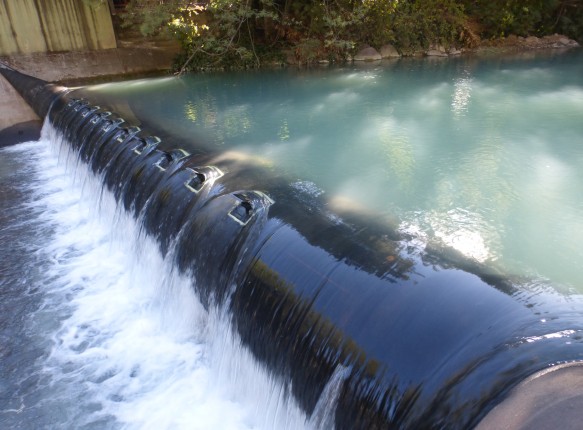
A rubber dam system is essentially a strong, flexible tube, or rubber membrane, made from reinforced rubber fabric. This tube is fixed firmly across a river or canal.
- When the rubber tube is filled with compressed air, it acts as a barrier, rising up to store water upstream.
- When the air is let out, the dam deflates, becoming flat on the riverbed, which lets water and debris pass freely.
The dam is fixed to its foundation, called the anchoring foundation, to make sure it’s secure.
How the Air System Works?
The air-filled system uses key parts: a tough rubber membrane, an air compressor (in a small control building) to push air in, and control valves managed by an automated controller.
Air is fast, light, and easy to control, which means the dam can react much quicker than mechanical systems.
This makes the dam an adjustable water barrier. Its height can be changed constantly by adjusting the air volume inside. Plus, these dams handle even overtopping very well. This means water can flow safely over the top of the inflated dam during high river flows without causing any damage, ensuring the dam’s stability and safety.
Key Benefits Over Traditional Structures
Innovation, for Signet EnerTech, means providing real, practical benefits. Compared to heavy, conventional concrete gates, the air-filled rubber dam offers huge advantages, making it a reliable and cost-effective dam solution.
- Quick and Simple Installation: You don’t need huge civil engineering projects. Installation is fast, usually involving anchoring the rubber bladder to a simple concrete base.
- Rapid Response: They have a very fast inflation and deflation time, typically operating within 5 to 30 minutes. This speed is vital for flood management technology when a flash flood hits.
- True Flexibility: The system provides a flexible dam solution because its height can be constantly adjusted using the automated control system.
- Precision Control: You can operate sections of the dam individually. This gives operators precise control over how much water is released and where, a level of detail impossible with large, single gates.
- Low Environmental Impact: When the dam is flat (deflated), it allows the natural water flow to continue, which is far better for the river’s ecosystem. The low environmental impact makes it a choice for sustainable water infrastructure.
- Lower Running Costs: With fewer moving metal parts to corrode or jam, the air-filled dam maintenance is much simpler, contributing to a truly low-cost water-control system over its long lifespan.
Rigid structures fail when they crack, jam, or simply can’t adapt to changing water levels during monsoon flood control. The rubber dam is a better choice because it’s inherently flexible and resilient.
Where Air-Filled Rubber Dams Are Used
The versatility of the inflatable rubber dam makes its applications incredibly wide-ranging, helping deliver essential rural water solutions and key urban support across India.
1. Water Storage for Farming
The irrigation rubber dam is perfect for seasonal water storage. By inflating the dam during the rainy season, you capture and store monsoon water in the river or canal. This stored water is then slowly released during the dry months, providing a reliable source for agriculture. This is an efficient way to increase the storage capacity of existing weirs without massive construction.
2. Immediate Flood Protection
As a flood control rubber dam, its main strength is its ability to disappear quickly. During heavy rain, deflating the dam instantly clears the river’s path, maximising the flow capacity and preventing dangerous overflow upstream. This is a crucial element of modern water management.
3. Keeping Rivers Flowing Steadily
For the overall health of the river, river flow regulation is essential. The dam’s ability to maintain a constant upstream water level by adjusting its height means the water supply remains steady all year round. This supports water intake structures and ensures the necessary natural water flow for the environment.
4. Protecting Coastal Areas
Along India’s coasts, rivers meet the sea. During dry periods, saltwater can push far inland and spoil the freshwater supply. The adjustable water barrier acts as an effective check against this bidirectional flow, protecting valuable freshwater resources in these coastal and estuarine zones.
Installation and Upkeep
Before any rubber dam installation, engineers check the site conditions, including water depth, slope, and expected sediment load.
- Foundation: The rubber membrane must be securely attached to a solid anchoring foundation, which is typically a basic concrete sill across the riverbed.
- Durability: The rubber material is designed for a long design life. The rubber sheet is tough enough to protect the deflated bladder from rough river-borne debris like logs and rocks. Several layers are combined to enhace life and flexibilty depending on site conditions, anywhere from 4-14 layers of EPDM used.
Maintenance: While maintenance is low, regular air-filled dam maintenance is necessary. This involves inspecting the rubber for damage and ensuring the sensors, valves, and the air compressor are working correctly.
The overall speed of operation and low maintenance requirements make this an excellent choice for adaptive water management solutions.
Why Air-Filled Rubber Dams are Essential for India
India’s future relies on smart, resilient solutions that can handle extreme weather. The air-filled rubber dam is precisely the quick-response, low environmental impact solution the country needs.
Since many regions in India experience both floods and water scarcity, sometimes in the same year, this flexible dam technology provides the balance needed.
- Addressing Scarcity: They make crucial seasonal water storage reliable, directly supporting water scarcity solutions in India for drought-prone areas and improving rural water solutions.
- Protecting Against Floods: Their instant deflation capability protects property and life, acting as reliable flood management technology.
- Cost-Effective Choice: Compared to building huge, fixed concrete structures, the air-filled rubber dam is a significantly cost-effective dam solution for government and rural projects, offering excellent value and long-term reliability. Minimal upkeep as rubber does not corrode. Since the bladder can be completely deflated, it is also a self cleaning system, in traditional methods this is not possible and it costs a lot more to clean and maintain the steel gates.
- Eco-Conscious: They are a truly sustainable water infrastructure option because they allow the river to function naturally when they are not needed.
Conclusion: The Promise of Rubber Dams
India needs modern water management systems that are smart, adaptable, and affordable. The air-filled rubber dam provides exactly this: a proven, versatile, and flexible dam technology for irrigation rubber dam projects, flood defence, and better flow regulation.
By offering instant, precise control over water levels, this technology empowers communities and governments to conserve precious water while protecting against disastrous floods. It’s about building safer, more resilient water systems for India’s future.
To explore how Signet EnerTech can implement this robust and versatile air-filled rubber dam solution for your project, ensuring maximum efficiency and environmental stewardship, please contact us today.
FAQs
1. What is an air-filled rubber dam?
An air-filled rubber dam is a flexible rubber structure installed across a river or canal that can be inflated with air to store water and deflated to release water.
2. How do air-filled rubber dams work?
They use compressed air to rise and create a barrier. When air is released, the dam collapses flat, allowing water to pass freely.
3. Where can air-filled rubber dams be used?
They are used in irrigation canals, flood-control systems, rivers, urban drainage networks, and coastal or estuarine areas.
4. What are the main benefits of air-filled rubber dams?
They are quick to install, cost-effective, flexible, safe during floods, and require low maintenance.
5. How fast can a rubber dam inflate or deflate?
Most air-filled rubber dams inflate or deflate within 5 to 30 minutes, depending on size.
6. Are air-filled rubber dams environmentally friendly?
Yes. When deflated, they allow natural river flow and cause minimal impact to the surrounding environment.
7. Why are rubber dams useful for India?
They help manage both flood conditions and water shortages, making them ideal for India’s unpredictable water patterns.
8. What is the medium used to fill these dams?
Air is the filling medium, which makes the system faster and easier to operate.