
The global coastline is under a level of pressure we have not seen in modern history. As sea levels rise and storm surges become more frequent and intense, traditional methods of defending our shores are being pushed to their limits. For decades, the go-to solution for coastal erosion control solutions involved “hard” engineering: massive concrete sea walls, heavy rock armoring, and steel groynes. While effective, these methods are often incredibly expensive, carbon-intensive, and disruptive to the very ecosystems they are meant to protect.
This is where geotextile tubes have emerged as a transformative alternative. These large-format geosynthetic containers offer a flexible, sustainable, and highly efficient way to manage wave energy and stabilize land. Unlike rigid concrete, these systems work in harmony with the marine environment. They provide robust shoreline protection systems that are not only easier to install but also significantly more cost-effective. In this guide, we will explore the technology behind these tubes, their diverse applications in marine environments, and why they are becoming the preferred choice for forward-thinking coastal engineers and environmental managers.
What Are Geotextile Tubes?
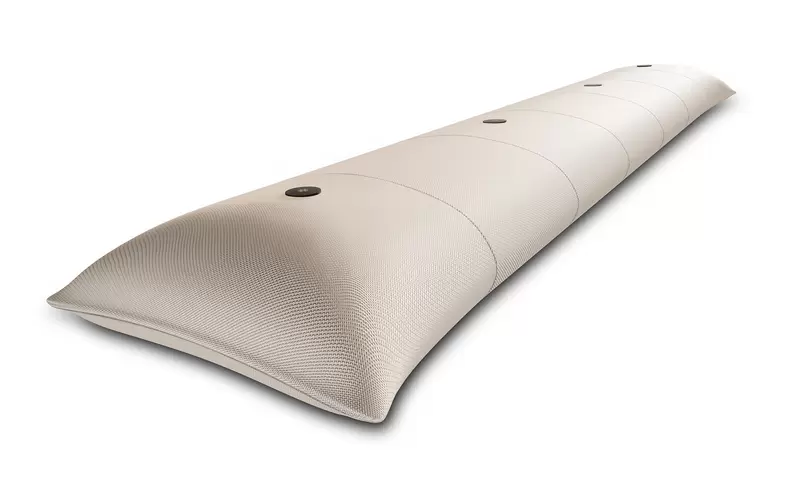
At their core, geotextile tubes are large, tubular containers manufactured from high-strength geosynthetic fabrics. Depending on the specific engineering application, these systems utilize permeable fabrics to facilitate dewatering or non-permeable composite layers when distinct containment or hydraulic barriers are required. Think of them as massive, industrial-grade “pillows” designed to withstand the harshest conditions the ocean can throw at them. These tubes are engineered to be filled with slurry, which is typically a mixture of water and locally available sand or dredged material.
These geotextile tubes are made from specially developed woven or composite geosynthetics. These materials are chosen for their high tensile strength and their ability to allow water to pass through the fabric pores while retaining the solid particles inside. This filtration process ensures that as the water drains away, the tube becomes a solid, heavy, and extremely stable mass.
Because they are manufactured from specialized polymers, they are inherently resistant to ultraviolet (UV) radiation and biological degradation. This makes them perfectly suited for marine environments where they are constantly exposed to saltwater, fluctuating temperatures, and abrasive sediment movement. At Signet EnerTech, we focus on providing these technologies because they represent a synergy between high-end engineering and ecological responsibility.
How Geotextile Tubes Work in Coastal Environments
Understanding how these systems function requires a shift in how we think about “defending” the coast. Traditional walls attempt to stop the ocean’s power through brute force. In contrast, marine geotextile solutions work by dissipating and absorbing energy.
When these tubes are placed along a shoreline or positioned offshore, they act as a buffer. As a wave hits the tube, the structure absorbs a significant portion of the kinetic energy. This reduction in wave force prevents the water from pulling sand and soil away from the beach.
Furthermore, these shoreline protection systems help in sediment retention. By slowing down the water flow, they allow suspended sand particles to settle behind or around the tubes, effectively “building” the beach over time rather than just preventing its loss.
The long-term resilience of a coastline depends on its ability to adapt. Geotextile tubes are not rigid; they can settle and slightly conform to the seabed. This flexibility prevents the common failure seen in concrete walls, where the water eventually “undermines” the foundation, leading to a total collapse. By maintaining a stable footprint, they ensure the shoreline remains intact for years to come. This makes them an ideal solution for locations with poor soil conditions or soft subsoils where heavy masonry would typically fail. Due to their significant size and the ability to be stacked, these tubes act as a stable extension of the ocean or river bed. This configuration creates a massive, positionally stable anchor point that works in harmony with natural hydrology. Instead of simply blocking water, the stacked tubes create an environment that allows for increased sedimentation. This process effectively facilitates land reclamation, helping to recover and increase land areas previously lost to erosion. Their sheer scale allows them to hold their own and remain structurally sound in high-energy environments where other solutions might crumble, making them especially useful for coastal regions with no natural rock beds for foundation support.
Geotextile Tubes for Coastal Protection
The shift toward geotextile tubes for coastal protection is largely driven by a need for “soft” engineering solutions. Hard structures like rock revetments require the quarrying and long-distance transport of thousands of tons of stone. This process is not only expensive but has a massive carbon footprint. Coastal protection geotextile tubes, on the other hand, utilize local materials. By using a suction dredger to fill the tubes with onsite sand, the need for heavy truck traffic is virtually eliminated.
Environmental compatibility is another major factor. These tubes can be manufactured in a sand-colored finish, allowing them to blend visually with the natural landscape. More importantly, the textured surface of the geotextile fabric is quickly colonised by maritime flora and fauna. Within a few seasons, a tube can become a living reef, supporting local biodiversity rather than destroying it.
For sensitive coastal zones, such as mangrove forests or protected wetlands, these tubes offer a “low-impact” installation. They can be placed with minimal disruption to the existing ecosystem, providing the necessary protection without the heavy footprint of traditional construction.
Geotextile Tubes for Erosion Control
The primary goal of any erosion project is to stop the shoreline from retreating. Geotextile tubes are exceptionally effective because they address the root cause of the problem: the imbalance of sediment.
Coastal erosion occurs when waves and currents carry away more material than is being deposited. By implementing coastal erosion control solutions using geotextile technology, we create a barrier that holds existing material in place while supporting the natural movement of sediment. Because these tubes are large and can be stacked, they function as an artificial bed that encourages sand to settle. This process allows for the reclamation of land lost to erosion, essentially serving as a stable anchor point that works in harmony with the local water flow.
In many cases, they are used to create “perched beaches.” Here, the tubes act as a submerged structural core that holds a large volume of sand in place, creating a wider beach that serves as a natural buffer for the upland property. This approach is an ideal solution for places with poor soil conditions or those lacking natural rock beds, as the sheer size and weight of the sand-filled tubes allow them to remain stable where other rigid solutions might fail. Whether the project is a temporary fix for a high-risk storm season or a permanent installation for a commercial port, the system’s ability to adapt to the environment is a significant engineering advantage.
Applications of Geotextile Tubes
The versatility of this technology allows it to solve a wide range of engineering challenges. Because SoilTain tubes are monolithic, durable, and highly adaptable, they serve as a permanent erosion control solution both on land and in water.
Geotextile Tube Breakwater
Breakwaters and groynes are essential for reducing the energy of incoming waves before they reach the shoreline. In these applications, geotextile tubes can be utilized either as the core of a larger structure or as a total replacement for the entire hydraulic framework. By forcing waves to break offshore, they create calmer water conditions that prevent the beach from being washed away.
Geotextile Tube Revetment
For direct shoreline protection, sea walls and revetments built with geotextile tubes offer a cost-effective alternative to traditional stone or concrete. These are particularly effective for permanent scour filling because of the fabric’s strong filtering capabilities. They protect embankments and roads by providing a robust barrier against direct wave impact.
Other Coastal & Marine Applications
The utility of these marine geotextile solutions extends to several specialized areas:
- Land Reclamation and Bank Protection: Tubes provide “containment” for sand material, which reduces wind and wave erosion and allows for significantly faster construction progress during reclamation projects.
- Dikes, Dams, and Dune Reinforcement: SoilTain is used to enhance and improve natural flood protection systems like dikes and dunes, providing a reinforced core that strengthens these natural barriers.
- Dewatering: Beyond erosion, these systems offer a low-cost dewatering solution that involves the extraction, conditioning, and disposal of materials in a simple-to-maintain process.
Tailings Dam Embankment Construction: In mining operations, these tubes allow for the progressive rising of tailings dams, contributing to both environmental and economic sustainability.
Geotextile Tube Installation Process
One of the most significant advantages of this technology is the streamlined geotextile tube installation process. Unlike traditional construction, it does not require a massive fleet of cranes and trucks.
- Site Preparation: The area is surveyed and cleared. A crucial component here is the “scour protection mat.” This mat, made of ribbon cloth and anchor tubes, is laid down first to prevent the water from “scouring” or digging out the sand from underneath the main tube.
- Laying Out: The pre-assembled tubes are laid out on the surface or the seabed. They are light and easy to handle before they are filled.
- Filling: Using a suction dredger or a mud pump, a slurry of sand and water is pumped into the tubes through factory-fitted filling ports. The water escapes through the fabric pores, while the sand remains trapped inside. For projects requiring multiple layers, this stage includes anchoring and tying the tubes together as the filling progresses to ensure the stack remains a single, monolithic unit.
- Closure and Alignment: Once the desired height and pressure are reached, the filling ports are secured with a closure system. The result is a heavy, positionally stable barrier.
Advantages of Geotextile Tubes Over Traditional Coastal Structures
When comparing modern shoreline protection systems to old-school rock or concrete, the benefits of coastal protection geotextile tubes become clear.
| Feature | Traditional (Rock/Concrete) | Geotextile Tubes |
| Installation Speed | Slow; requires heavy machinery | Fast; hydraulic filling |
| Environmental Impact | High (quarrying & transport) | Low (uses onsite materials) |
| Cost | Very high | Cost-effective |
| Flexibility | Rigid; prone to cracking | Flexible; adapts to seabed |
The ability to use local materials is a game-changer for project budgets. By eliminating the cost-intensive transport of rocks, projects that were once financially impossible become viable. Furthermore, the high UV and abrasion resistance ensure a long service life, making them a durable investment for any coastal community.
When Are Geotextile Tubes the Right Choice?
While geotextile tubes for coastal protection are incredibly versatile, they are most effective when chosen for the right conditions. They are an ideal choice for areas where the soil is soft or prone to erosion, as the scour protection mat guarantees stability even in difficult subsoils.
They are also the right choice when environmental regulations are strict. Because the use of geotextile tubes is scientifically proven to be harmless to the environment, getting regulatory approval is often much smoother than for “hard” structures. Whether you need a solution for a construction project or a permanent defense for a seaside resort, these tubes offer the adaptability required for modern hydraulic engineering.
Conclusion
The challenge of coastal erosion is not going away, but our methods for addressing it have evolved. Geotextile tubes represent the perfect balance of engineering strength and environmental mindfulness. By utilizing high-strength fabrics and local resources, we can create marine geotextile solutions that protect our coastlines without destroying the natural beauty and biodiversity that makes them so valuable.
At Signet EnerTech, we believe that innovation must be at the heart of every geotechnical solution. These systems provide a positionally stable, scour-free, and sustainable way to safeguard our shores for future generations. As we look toward a future with rising sea levels, the flexibility and efficiency of geotextile technology will undoubtedly be a cornerstone of global coastal resilience.
FAQs
1. What are geotextile tubes?
Geotextile tubes are large, tubular containers made from high-strength permeable geotextile fabric. They are filled with sand or dredged material and used in coastal and marine environments to control erosion, stabilize shorelines, and dissipate wave energy.
2. How do geotextile tubes help in coastal protection?
Geotextile tubes reduce the impact of waves by absorbing and dissipating wave energy before it reaches the shoreline. They also retain sediment, helping to stabilize beaches and prevent coastal erosion over time.
3. Are geotextile tubes effective for erosion control?
Yes, geotextile tubes are widely used for erosion control. When placed along eroding shorelines or embankments, they act as barriers that prevent soil loss and support natural sediment accumulation.
4. What is the difference between a geotextile tube breakwater and a revetment?
A geotextile tube breakwater is usually placed offshore or nearshore to reduce wave energy before waves reach the coast. A geotextile tube revetment is installed along the shoreline or slope to protect embankments from direct wave action and erosion.
5. What materials are used to fill geotextile tubes?
Geotextile tubes are typically filled with locally available sand, dredged material, or sediment. Using on-site material makes them cost-effective and environmentally sustainable.