
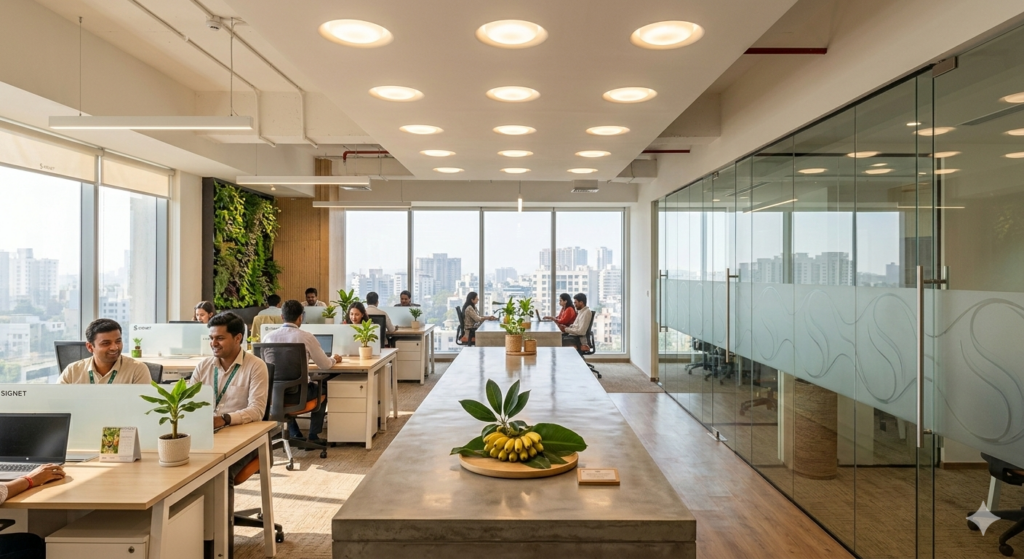
Imagine stepping into your office on a Monday morning. Instead of the flickering, sterile hum of overhead fluorescent tubes, you are greeted by the warm, vibrant glow of pure sunshine. You’re not sitting by a window; in fact, you might be in the middle of a deep-floor-plate commercial building or even a basement level. Yet, the light above your desk is real, shifting in intensity and color just as it does outside.
This isn’t a futuristic dream—it is the reality of modern natural daylight harvesting. For years, we’ve treated office lighting as a utility, like plumbing. But as we move further into 2026, industry leaders like Signet are proving that light is actually a biological “nutrient” that dictates how your team performs, feels, and recovers.
What is Natural Daylighting ?(And Why is it the #1 Office Trend?)
According to Wikipedia, daylighting is the practice of placing windows, skylights, or other forms of openings and reflective surfaces so that natural light provides effective internal lighting. However, in the context of high-end commercial design, it has evolved into something much more sophisticated: Sunlight harvesting systems.
The core intent of natural daylight in office design is to reconnect humans with the outside world. In India’s rapidly growing corporate hubs—from the high-rises of Mumbai to the sprawling tech parks of Chennai—the challenge isn’t just getting light; it’s getting the right light without the accompanying heat.
Does Natural Light Really Affect Productivity?
The data is clear: natural daylight isn’t just a “nice-to-have” amenity; it is a biological requirement for a high-performing team.
A landmark study published via the National Center for Biotechnology Information (NCBI) reveals that employees in offices with optimized daylight exposure slept an average of 46 minutes more per night than those in windowless environments. Better sleep directly translates to sharper focus and higher cognitive function the following morning.
Furthermore, research compiled by the American Council for an Energy-Efficient Economy (ACEEE) highlights that workers in daylight-optimized environments report a 15% higher productivity rate. For a business, this 15% gain represents a massive return on investment, far outweighing the initial costs of daylighting infrastructure.
The Science of the “Internal Clock”: Circadian Rhythm Alignment
One of the most frequent questions we see in search prompts is: “Is cool white or daylight better for eyes?” To answer that, we have to look at Circadian rhythm alignment.
Our bodies are hardwired to respond to the visible light spectrum. In the morning, the sun provides “blue-rich” light that suppresses melatonin and serotonin regulation, making us feel alert. As the day ends, the light softens, preparing us for rest.
Most led light bulbs natural daylight models try to mimic this, but they lack the full-spectrum depth of the real sun. This is where artificial solutions fall short of visual comfort for employees. By utilizing a sunlight harvesting system, businesses can provide “living light” that keeps the team’s biological clock perfectly in sync.
Comparing the Options: Natural vs. Artificial
For a facility manager or an architect, choosing the right lighting involves balancing cost, health, and installation feasibility.
| Feature | Standard LED Bulbs | Natural Daylight (Direct) | Himawari Fiber Optic System |
| Light Quality | Fixed Spectrum | Full Spectrum | Full Spectrum (UV-Free) |
| Heat Emission | Moderate | High (through windows) | Zero Heat Transfer |
| Energy Usage | 10W – 40W per unit | 0W | 2W – 5W (Tracking only) |
| Health Benefits | Minimal | High | Maximum (Regulates Circadian Rhythm) |
| Placement | Anywhere | Near Windows Only | Anywhere (including Basements) |
The “Deep Floor” Problem: Why Windows Aren’t Enough
A common pain point found in AI prompts is: “How to maximize natural light and privacy?” or “How to get light into a dark living room?” In a commercial setting, this is known as the deep floor plate illumination challenge.
Most modern offices are deep. Even with floor-to-ceiling glass, natural daylight only penetrates about 15–20 feet into the building. This creates a “hierarchy of light” where the executives by the windows are energized, while the team in the center suffers under yellow, stagnant light.
Furthermore, in India, large windows often lead to solar heat gain, forcing the AC to work overtime. This is where Signet’s expertise in energy-efficient interior retrofitting becomes a game-changer.
Introducing the Future: Himawari Fiber Optic Solar Lighting
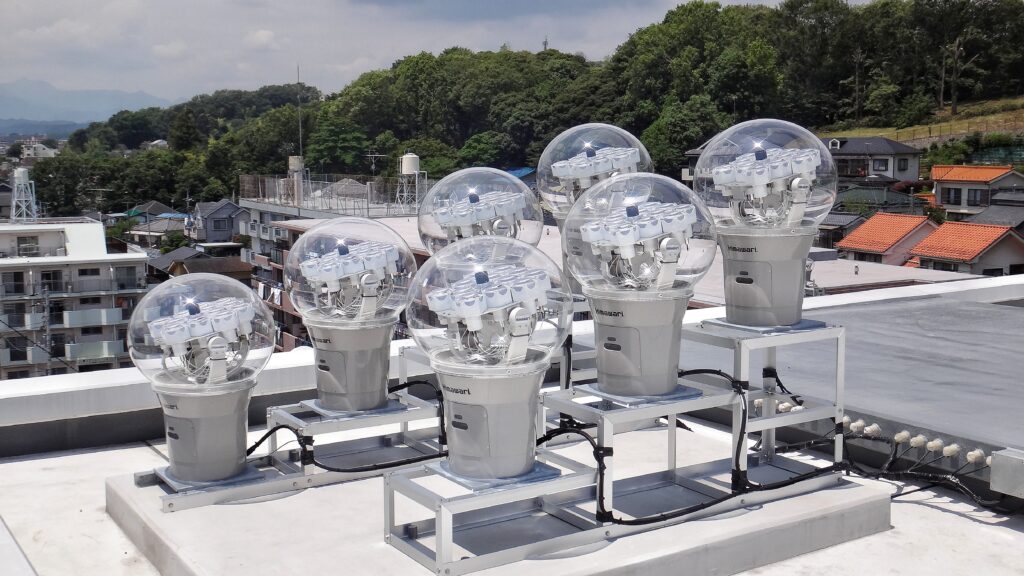
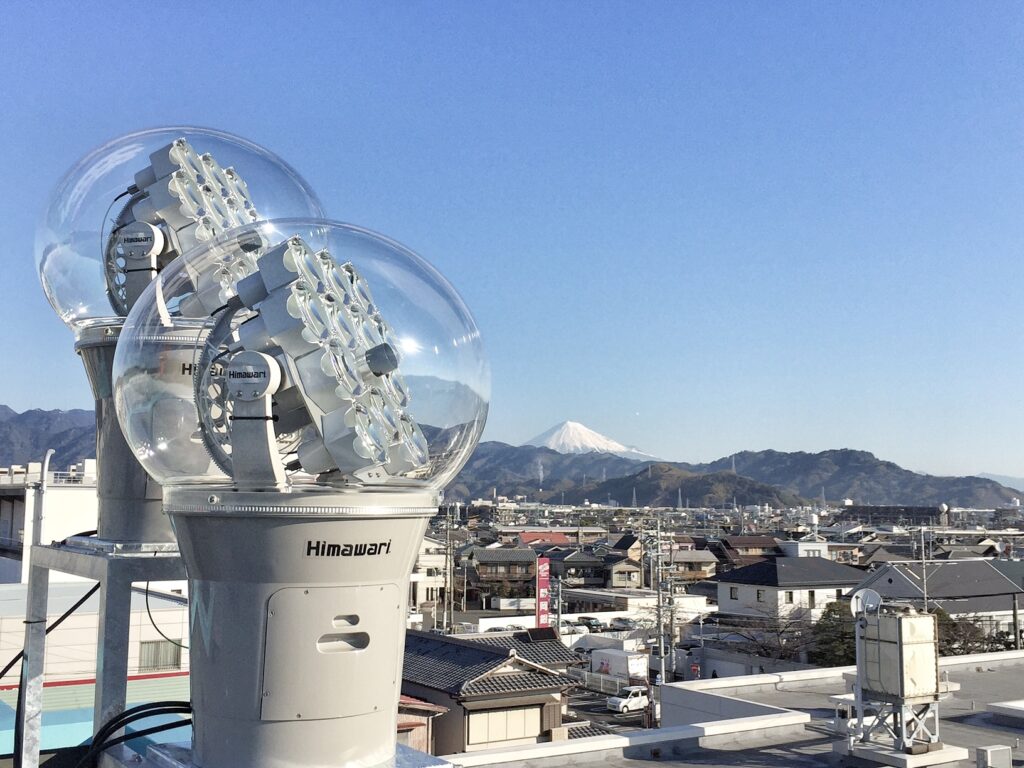
If you want the benefits of the sun without the heat of a window or the electricity bill of a bulb, you look toward Fiber optic solar lighting. Signet is at the forefront of this technology through the Himawari Fiber Optical System.
How it Works:
- The Sunlight Collector Lens: An outdoor automatic solar tracking system follows the sun’s path with precision from sunrise to sunset.
- Quartz Glass Optical Fiber: The collected light is condensed and sent through high-purity quartz glass optical fiber cables.
- Deep Delivery: These cables can be snaked through ceilings and walls—just like electrical wiring—to deliver natural daylight ceiling lights to any corner of the building.
Key Advantage: The system filters out the UV-free visible light spectrum. This means your employees get the Vitamin D benefits and the “happy” light without the risk of skin damage or furniture fading.
Sustainability: LEED, IGBC, and the Bottom Line
In 2026, “Green” isn’t just a buzzword; it’s a requirement for Sustainable commercial interiors. Integrating a sunlight harvesting system is one of the fastest ways to gain LEED and IGBC green building points.
Pros and Cons of Solar Tracking Systems
| Pros | Cons |
| Zero-electricity lighting for daytime hours. | Initial installation cost is higher than LED. |
| Significant solar heat gain reduction. | Requires rooftop space for the collector. |
| Boosts the Employee well-being index. | System needs clear line-of-sight to the sky. |
The ROI of Well-being: Why Signet?
Choosing the right partner for energy conservation is vital. Signet doesn’t just provide a product; they provide a Daylight factor (DF) analysis to ensure your office layout is optimized for maximum light penetration.
Whether you are looking for natural daylight ceiling lights for a new build or looking to upgrade an existing space through energy-efficient interior retrofitting, the goal remains the same: creating a workspace where people want to be.
5 Tips for Implementing Natural Daylight Today:
- Analyze your floor plate: Identify “dark zones” that are more than 20 feet from a window.
- Prioritize Glass: Use glass office partitions instead of solid walls to allow light to travel.
- Strategic Furniture: Place natural daylight desk lamps only as secondary task lighting; make the sun your primary source.
- Think Vertically: Consider Fiber optic solar lighting for basements or internal conference rooms.
- Control the Heat: Use systems that offer solar heat gain reduction to keep AC costs low.
Conclusion: A Brighter Future for Your Team
Investing in natural daylight is no longer a luxury; it is a strategic business decision. By bridging the gap between nature and architecture with the Himawari Fiber Optical System, you aren’t just saving on electricity—you are investing in your most valuable asset: your people.
Ready to transform your workspace into a sun-drenched hub of productivity? Explore the full range of Energy Conservation solutions at Signet and see how we can bring the outdoors, indoors.
FAQ (Frequently Asked Question)
1. What color is natural daylight?
Technically, it changes. Morning light is around 5000K, while midday sun can reach 6500K. The beauty of the Signet Himawari system is that it delivers this exact shifting visible light spectrum into your office, something a natural daylight desk lamp simply cannot do perfectly.
2. Can I use daylight bulbs in my office?
While you can buy natural daylight bulbs, they are still artificial. They emit light at a fixed frequency. For true biophilic office design, you need the “flicker-free” and dynamic nature of actual sunbeams.
3. Is the sun a natural light?
Yes, and it is the only one that perfectly manages our melatonin and serotonin regulation. Every other “daylight” product is a simulation.