
In the global drive toward sustainable architecture and green building practices, the strategic utilization of natural light is paramount. Maximizing natural light transmission technology is critical not only for reducing massive electrical footprints but also for enhancing well-being.
The challenge lies in illuminating deep interior spaces that traditional windows and skylights simply cannot reach, often requiring heavy reliance on artificial lighting. While conventional daylighting is limited by architecture, distance, and heat transfer, a revolutionary technology has emerged to bridge this gap: fiber optic daylighting. This advanced category of solar daylighting system represents the ultimate synergy of innovation and sustainability.
Signet EnerTech, with our mission to deliver cutting-edge technologies and methods for energy conservation, is the proud provider of the world-leading Himawari system in India. We delve into the mechanics and unparalleled advantages of this technology, demonstrating why it is a vital component for a sustainable future.
What Is Fiber Optic Daylighting?
A fiber optic daylighting system is a cutting-edge technological approach designed to actively capture, filter, and channel pure sunlight from the exterior to the interior spaces of a building. Unlike conventional static skylights or simple Tubular Daylighting Devices (TDDs), which are limited to rooms directly below the roofline, a fiber optic system uses specialized optical fibers as its transmission medium. The core purpose of this technology is to facilitate the daylight delivery system by transporting light over 100 m in any direction and around structural obstacles, bringing authentic, full-spectrum sunlight to traditionally dark or windowless rooms, such as basements, core offices, interior corridors, stadiums, tunnels, vertical gardens. It functions as an intelligent active daylighting system, because this actively tracks the movement of the sun, constantly reorienting itself to align with it for maximum output during the day By separating the collection point from the distribution point using flexible optical fibers, the system overcomes the major limitations of light transmission distance and architectural constraints, establishing itself as the superior solution for comprehensive illumination.
Why Fiber Optic Daylighting Is Considered an Advanced Sunlight Transport System?
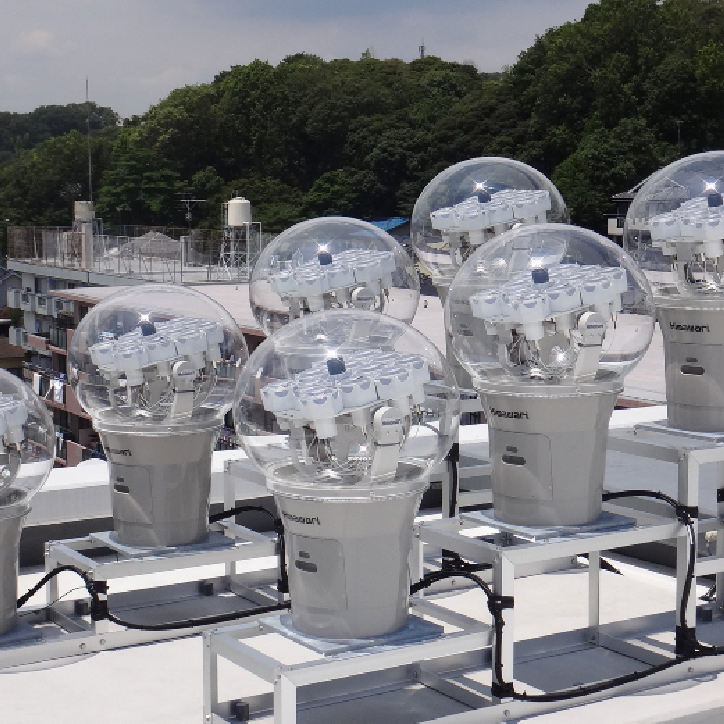
The efficiency, purity, and versatility of a fiber optic sunlight transport system are fundamentally superior to older daylighting techniques. This is achieved through the integration of three distinct, high-performance technological components working in perfect synchronization, all protected by a robust exterior acrylic dome.
1. Precision Solar Light Collector
At the system’s core is the solar light collector, an assembly of high-efficiency convex lenses. These precision optics are engineered to capture the maximum amount of direct sunlight possible. The sun’s rays are intensely condensed, up to 10,000 times, and accurately focused onto the minute inlet of the fiber optic cable. This extreme concentration enables the high-intensity light output required for effective illumination deep within a building. The precision of this optical system minimizes the loss of luminous flux before transmission, ensuring maximum overall solar illumination system performance and superior quality light input.
2. Dual-Axis Solar Tracking System
To ensure continuous, maximum output from dawn to dusk, the collector assembly utilizes a sophisticated dual-axis solar tracker. Since the sun’s position constantly shifts throughout the day and year, a static collector would only achieve peak efficiency briefly. The dual axis solar tracker mechanism, powered by a low-consumption sensor and clock, continuously detects the sun’s trajectory. This enables the focusing lenses to always aim perpendicular to the sun’s rays, even tracking the sun’s calculated path in cloudy conditions. This critical feature ensures stable, high-intensity sunlight capture throughout the day, dramatically improving the system’s total daily energy yield.
3. Ultra-High-Purity Fiber Optic Cables
The transmission channel consists of medical grade quartz glass fiber cable. This high-purity composition is vital for the fiber optic solar lighting system, allowing it to transmit the intensely concentrated light with minimal attenuation or loss of luminous flux over long distances. The light travels through the fiber core via total internal reflection, maintaining its integrity. This enables the system to deliver a quality of natural light transmission technology that is virtually indistinguishable from real sunlight. The flexible nature of the cable allows for easy routing around architectural obstacles, reaching rooms far from the roof where reflective systems would fail.
4. Maximum Lumen Output with Zero Heat Transfer
A profound benefit of this system is its ability to deliver maximum lumen performance indoors without the negative byproducts of solar radiation. During the initial focusing stage, a process of chromatic aberration is utilized. The beneficial visible rays are condensed and transmitted, while harmful infrared (IR) rays (carrying heat) and ultraviolet (UV) rays are eliminated or screened out. The result is pure, high-quality sunlight that is UV-free and zero-heat. This makes the system perfect for sensitive, temperature-controlled spaces, providing illumination without increasing the air conditioning load or causing degradation of furnishings.
How the Fiber Optic Daylighting System Works?
The operation of the fiber optic daylighting system is a seamless, four-step process that transforms intermittent external sunlight into a stable, continuous flow of interior light.
1. Sunlight Collection via Precision Lens Dome
The process begins on the roof where the exterior unit, protected by an acrylic dome, captures sunlight through an array of high-precision convex lenses. These lenses function as a powerful solar light collector, concentrating the parallel rays intensely. By precise positioning, the fiber inlet is aligned with the focal point of the visible light spectrum, effectively filtering out the heat-carrying infrared and the damaging ultraviolet rays before transmission.
2. Continuous Solar Tracking for Peak Efficiency
The collector is mounted on an automatic solar tracking system. This sophisticated mechanism, typically a dual axis solar tracker, uses sensors and trajectory calculations to move the collector in two dimensions. This movement ensures the light-focusing lenses are always aimed directly at the sun, from sunrise to sunset, guaranteeing maximum light input and maintaining a consistent, stable flow of light throughout the day, regardless of the sun’s position.
3. Sunlight Transmission Through Optical Fibers
Once concentrated and filtered, the pure visible sunlight is coupled into the ultra-high-purity quartz glass optical fibers. The sunlight travels through the fiber core by total internal reflection, bouncing off the internal cladding with negligible intensity loss. This is the efficient operation of the fiber optic sunlight transport system. The flexibility of the cable allows for routing through walls, ceilings, and around structural elements, enabling natural light delivery far into the building’s core.
4. Delivery of Pure Natural Light Indoors
The final stage involves the light being emitted from the end of the cable through a specialized fixture or diffuser, often resembling a modern fiber optic skylight. This fixture uniformly disperses the high-quality, pure visible light into the room. These come in hybrid and various models to aesthetically blend with the rest of the area’s light fittings to operate during daylight adn hybrid switches to electric power at night. This entire controlled process differentiates fiber optic daylighting from simple passive systems, ensuring a high-quality, full-spectrum solar fibre optic lighting experience in virtually any indoor location.
Applications of Fiber Optic Daylighting in India
Given India’s high solar irradiance and strong focus on sustainability, advanced fiber optic daylighting is a transformative technology for numerous sectors committed to green, efficient design.
1. Commercial Buildings
In large corporate offices, IT parks, and multi-story retail centres, the ability to channel light deep into the building core is a significant advantage. Fiber optic daylighting substantially reduces the need for electrical lighting, leading to massive energy savings and lower operational overheads. The introduction of genuine natural light is also proven to boost employee visual comfort, alertness, and overall productivity.
2. Industrial & Manufacturing
Industrial and manufacturing facilities often have deep floor plates and high-bay structures that are costly to illuminate artificially. Deploying this system brings high-quality illumination to these deep interior areas, improving working conditions, safety, and operational efficiency. The low-maintenance, reliable nature of the system is a major asset in these environments.
3. Institutional & Government
Museums, archival centers, laboratories, and research facilities require stable, high-quality illumination without UV or heat damage. The unique filtration mechanism makes the system ideal, providing excellent visibility and a natural spectrum while protecting sensitive materials and equipment from the degradative effects of unfiltered sunlight.
4. Residential Villas & Luxury Interiors
For high-end residential projects, solar fibre optic lighting offers unparalleled aesthetic and lifestyle appeal. It allows designers to introduce the unique warmth and quality of fibre optic natural lighting into otherwise dark spaces like basements, internal courtyvers, and walk-in closets, adding a sophisticated layer to the luxury interior design.
Benefits of Fiber Optic Daylighting Systems
The adoption of a modern fiber optic daylighting system offers integrated benefits across environmental, economic, and human health metrics.
1. Energy Conservation & Sustainability
The primary functional benefit is the dramatic reduction in electrical energy required for lighting during daylight hours. By harnessing free, renewable sunlight, buildings drastically cut their reliance on the grid. Systems like Himawari consume minimal power (as low as 2W) for tracking, leading to massive energy savings and directly supporting sustainable building certifications.
2. Brings Sunlight to Windowless Spaces
The system’s high flexibility and long-distance transmission capability solve the fundamental problem of illuminating dark, windowless areas. This advanced daylight delivery system ensures that every corner of a building receives natural light, improving the utility and biological appeal of previously inaccessible rooms.
3. No Heat Transfer, UV-Free Light
The inherent filtration process screens out both the heat-carrying infrared (IR) and the damaging ultraviolet (UV) parts of the spectrum. The result is pure, cool, visible light. This eliminates solar heat gain, significantly lowering air conditioning loads, which is crucial for energy conservation in India’s climate.
4. Long-Term Low Maintenance
Engineered for longevity, the robust design, including the protective acrylic dome, and the highly reliable components ensure minimal upkeep. The proven, extremely low failure rate of the Himawari system translates directly to a low total cost of ownership and minimal operational interruption over its long service life.
Fiber Optic Daylighting vs Traditional Daylighting & Skylights
The modern fiber optic daylighting system is distinctly superior to older technologies by overcoming their core limitations in distance, filtration, and light quality. Traditional methods, such as conventional skylights, struggle with heat, glare, and leakage issues, and are severely limited by building geometry. TDDs offer some light but suffer major light loss over distance and cannot handle complex routing. The fiber optic system, with its active tracking and ability to deliver filtered light over long distances, provides an unparalleled level of efficiency, quality, and architectural freedom.
Why Choose Signet for Fiber Optic Daylighting Solutions in India?
At Signet EnerTech Private Limited, we prioritize delivering sustainable synergy. Innovation is at our heart; we provide global technologies and best practices to help our clients achieve energy conservation and solve environmental challenges.
1. Authorized Indian Distributor
Signet is the authorized Indian distributor of the globally renowned Himawari Solar Lighting System. This partnership guarantees that our clients receive genuine, high-quality, and deeply proven fiber optic daylighting technology, backed by international standards and local expertise.
2. Technical Consultation & Custom System Design
Our team consists of specialists who understand the fusion of new technology and commercial viability. We offer expert technical consultation, analyzing your specific lighting needs and building design to ensure a fully customized fiber optic daylighting system that delivers optimal, stable output and efficiency for your unique project requirements.
3. On-Site Assessment & Installation Support
Delivering complex energy solutions demands precise execution. We provide detailed on-site assessments to determine the best collector placement and most efficient cable routing. Our support covers comprehensive installation and calibration, guaranteeing that the high-purity quartz glass fibers and the tracking mechanism function for maximum performance from day one.
4. Integration with Green Building & Sustainability Goals
Partnering with Signet means gaining an edge in sustainability. We help organizations drastically reduce operational overheads and energy consumption, directly aiding in the achievement of green building certifications and fulfilling broader corporate environmental mandates. Our solutions are a vital step toward a lower carbon and ecological footprint for your infrastructure.
Conclusion
The fiber optic daylighting system represents the zenith of modern daylighting technology. It is a sophisticated, scientifically superior solution that successfully delivers pure, beneficial, UV-free sunlight deep into a building’s core, achieving massive energy savings, superior indoor environmental quality, and genuine long-term sustainability. By effectively overcoming the spatial and thermal limitations of all predecessors, this system has established itself as the indispensable future of natural light transmission technology. As the authorized provider of the world-class Himawari system in India, Signet EnerTech is uniquely positioned to help architects, developers, and corporations integrate this cutting-edge technology into their next-generation sustainable projects.
Ready to transform your building’s energy footprint and indoor environment with pure, natural sunlight? Contact Signet EnerTech today to design your custom fiber optic daylighting solution.
Frequently Asked Questions About Fiber Optic Daylighting
1. How much does a fiber optic sunlight collector cost?
The cost of a fiber optic sunlight collector system varies based on size and required light output. While the initial investment is higher than traditional lighting, the long-term benefit is a rapid return on investment achieved through massive, ongoing energy savings and extremely low maintenance requirements with an ROI that is achievable in 4 years.
2. How does fiber optic lighting work?
Fiber optic lighting works by capturing sunlight via a precision lens system, filtering out heat and UV rays, and then transmitting the pure visible light through a highly pure optical fiber cable via total internal reflection to the desired interior location.
3. What is the difference between LED and fiber optic lighting?
LED lighting is an artificial, electrical light source. A fiber optic daylighting system transmits real sunlight. It delivers the full, dynamic, and biologically beneficial spectrum of natural light transmission technology without generating heat or consuming substantial electrical power.
4. Can fiber optic systems change color?
A pure fiber optic daylighting system transmits the natural spectrum of the sun. And by altering the focal length of the daylight system, it can be made warmer(red) or cooler(blue) to blend with the existing lights.
5. What is the working principle of fiber optic daylighting?
The working principle involves three steps: 1) Collection and Filtration via a sun-tracking lens system, 2) Transmission of the purified light through optical fibers by total internal reflection (fiber optic sunlight transport system), and 3) Delivery of the stable solar fibre optic lighting indoors via a diffuser.
6. Is fiber optic daylighting better than traditional skylights?
Yes, fiber optic daylighting is significantly better. It eliminates solar heat gain and UV, provides light to deep interior spaces over long distances, and maintains a stable light level via active solar tracking, making it a superior solar daylighting system.