
India faces a significant threat from climate related events, with the Asian Development Bank estimating that floods represent over 50% of the country’s most destructive disasters. According to data from the Central Water Commission (CWC), India has lost roughly INR 4.69 trillion over the last 65 years due to damage to homes, crops, and infrastructure. For years, we relied on heavy sandbags and concrete walls, but these “old school” methods are often too slow for modern emergencies. This is where inflatable flood barriers change the conversation. By providing a rapid, high strength response, these barriers offer a smart alternative for protecting both residential streets and industrial hubs. At Signet EnerTech, we focus on bringing these global best practices to India, ensuring that our flood protection solutions are as innovative as they are reliable.
What Are Inflatable Flood Barriers?
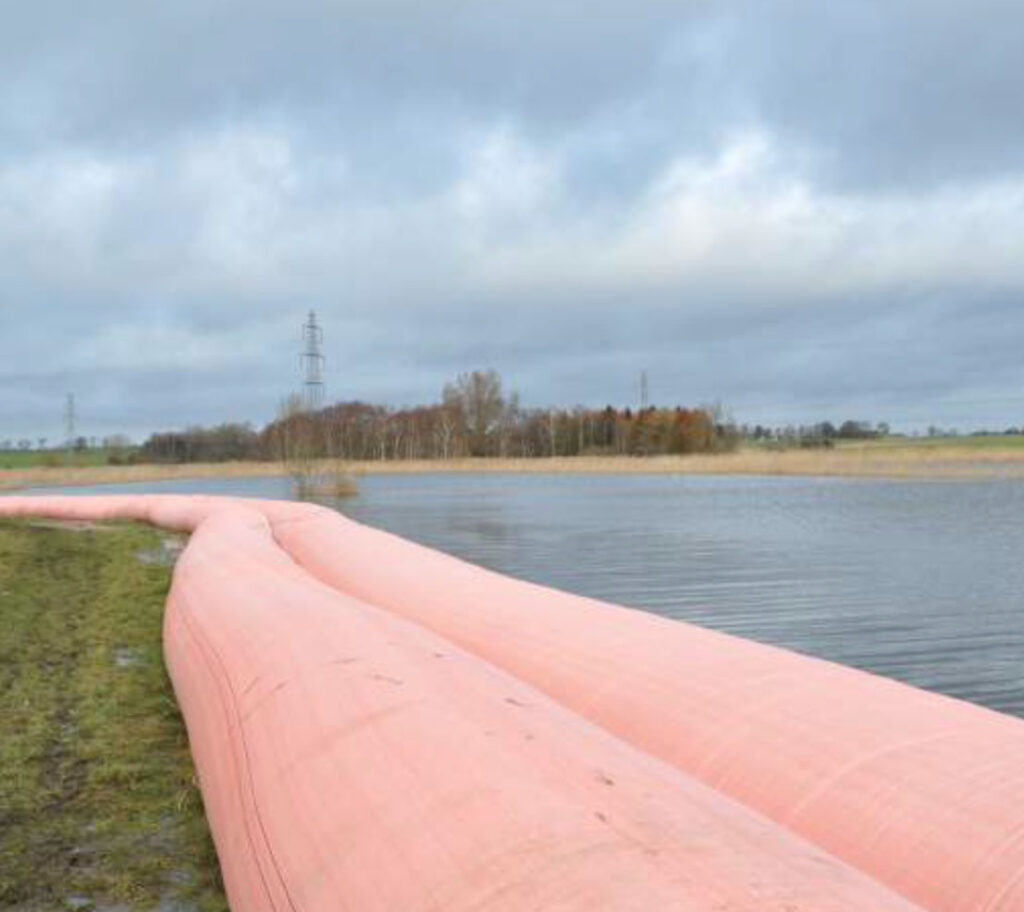
When people think of flood protection, they usually imagine heavy machinery or hundreds of people hauling sandbags. However, an inflatable flood barrier is a completely different approach. It is essentially a mobile, geotechnical tube made from extremely tough, abrasive resistant materials. The NoFloods technology we utilize is built to withstand tears and most industrial chemicals, making it far more than just a temporary “tube.” These inflatable barriers act as a solid wall once deployed but remain incredibly flexible and lightweight when empty. The system is patented and consists of three main components that work together to create a high strength dam. Unlike permanent walls that ruin the aesthetics of a property or site, these flood control barriers are only there when you need them. They are designed to protect people and critical infrastructure with a very low environmental footprint, making them a top choice for modern environmental challenges.
How Inflatable Flood Barriers Work
The science behind these barriers is quite fascinating because it uses the very thing it fights, water, to create stability. When the inflatable flood barriers are first brought to a site, they are very light, weighing only about 3 kg per meter. This makes it possible for a small team to position them exactly where they are needed. Once the tubes are laid out, they are inflated with air to give them shape and then filled with water. A water inflatable flood barrier becomes a powerhouse once full; that same meter of tubing now weighs about 2,350 kg. This incredible mass ensures that the flood control barriers stay locked to the ground, even against surging floodwaters. Because the material is flexible, the barrier “hugs” the ground, conforming to uneven surfaces like gravel or grass to create a tight seal. This prevents water from sneaking underneath, which is the main reason why traditional barriers often fail.
Types of NoFlood Barriers
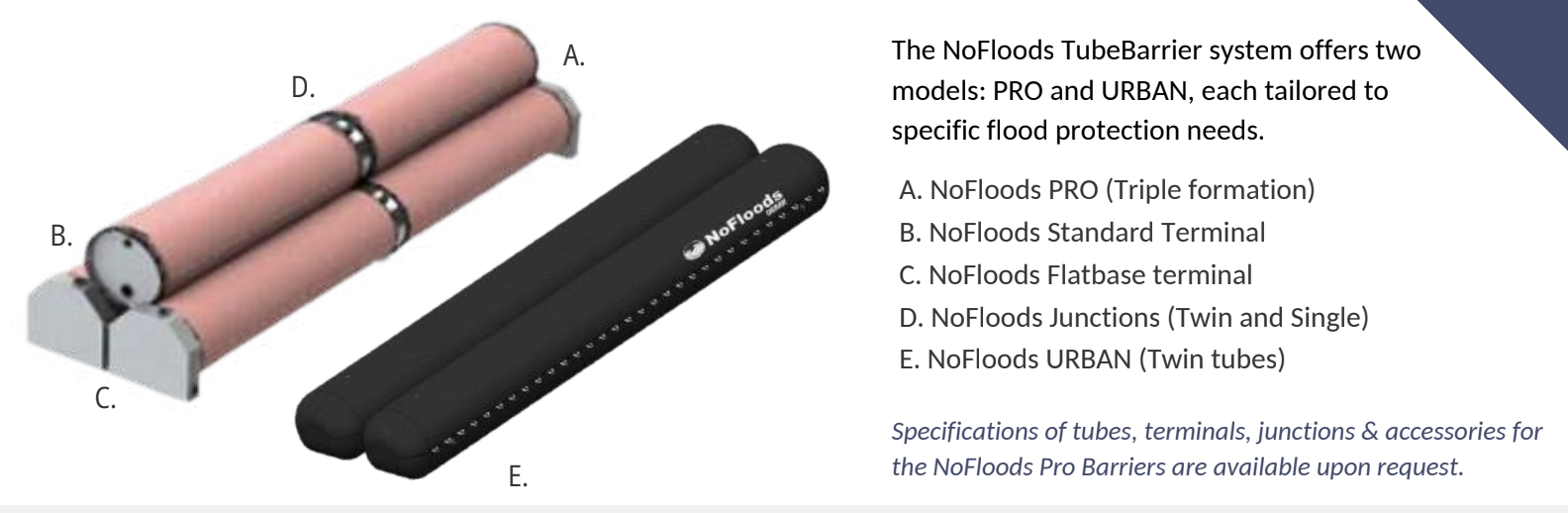
Not every flood risk is the same, so the solutions shouldn’t be either. Signet EnerTech offers different variants of the water inflatable flood barrier to fit various needs. For large scale protection, we have the PRO variant. It is designed for massive tasks, like protecting a whole factory or a long stretch of road. Interestingly, installing just one kilometer of the PRO barrier can reduce CO2 emissions by up to 99.5% compared to using sandbags. For faster, more agile needs, the FLEX inflatable barriers are the go-to option. These are perfect for quick water diversion or smaller projects where you don’t have a lot of storage space.
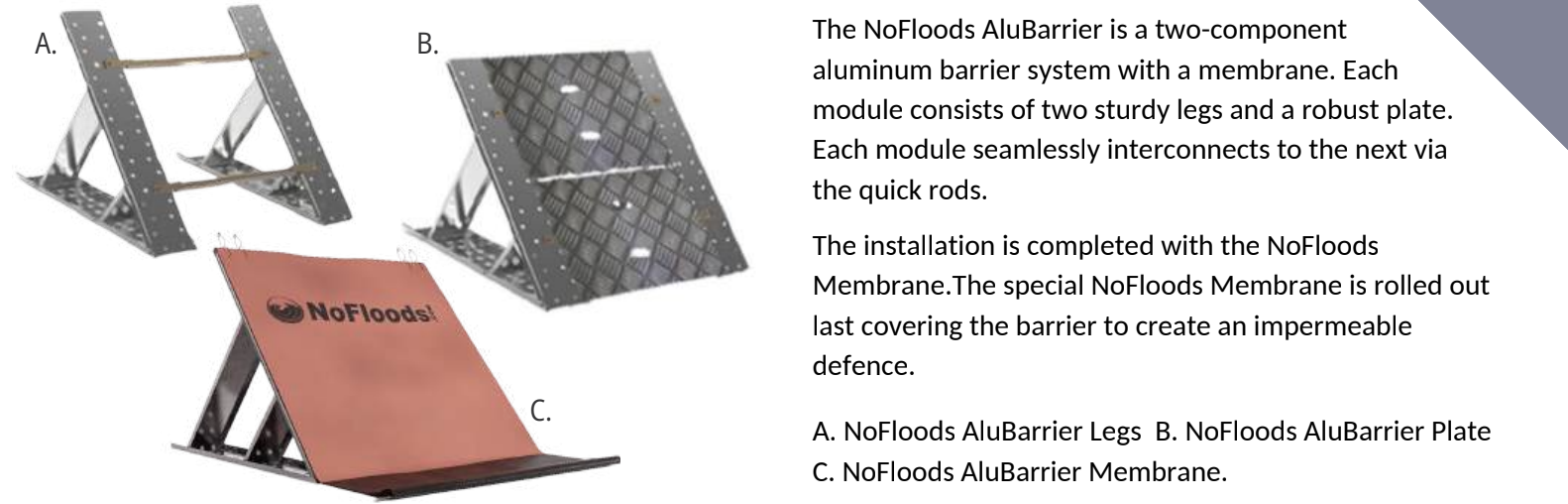
We also offer the ALU variant, which is a removable flood barrier. It’s ideal for users who want a long lasting, durable solution but might not have immediate access to a water source during a flash flood. These portable flood barriers ensure that no matter the location, you have a defense that is ready to go.
Key Benefits of Inflatable Flood Barriers
Why are so many industries moving toward this technology? These flood control barriers offer practical advantages that save time and money:
- Unmatched Speed: A small crew of 4 men can set up 1,000 meters of inflatable flood barriers in under 4 hours. That is simply impossible with any other method.
- Minimal Storage: These are portable flood barriers. When deflated, they take up very little space.
- Environmental Impact: Because they are reusable and don’t require digging up sand, they are one of the most sustainable options on the market.
- Extreme Stability: With a weight of 2,350 kg per meter when filled, they stay exactly where you put them.
- Adaptability: They work on any surface—concrete, grass, or dirt—and can even be used in cold weather by circulating the water inside to prevent freezing.
Inflatable Flood Barriers vs Traditional Flood Control Methods
If you have ever tried to fill and move a thousand sandbags, you know how backbreaking and inefficient it is. Sandbags often leak, and once the flood is over, you are left with tons of contaminated sand to dispose of. Permanent walls, on the other hand, are expensive and can’t be moved if the water changes direction. Here is how modern flood protection solutions stack up against the old ways:
| Feature | Inflatable Barriers | Sandbags | Fixed Walls |
| Labor | 2 to 4 People | Dozens of workers | Construction Crew |
| Setup Time | A few hours | Several days | Permanent |
| Storage | Very compact | Needs a large yard | N/A |
| Seal Quality | Conforms to ground | Prone to seepage | Fixed |
| Eco-Friendly | Yes (Reusable) | No (Wasteful) | No (High Carbon) |
These differences make the No-Flood inflatable barriers the better choice.
Applications of Inflatable Flood Barriers
The versatility of these systems is what makes them a favorite for city planners and business owners alike. While they are great for residential use, they function as essential portable flood barriers in many other areas:
- Construction Sites: They are often used as cofferdams to keep a work area dry while repairing docks or bridges.
- Industrial Warehouses: Protecting high value inventory and machinery from flash floods.
- Municipal Infrastructure: Blocking off access roads from storm surges or protecting power stations.
- Temporary Water Storage: They can even be used to store rainwater or wastewater during an emergency.
Whether it is for damming a slope or protecting a city’s descent, inflatable flood barriers are flexible enough to handle the job. The standard size can hold back up to 80 cm of water, which is more than enough for most seasonal flooding events.
Why Choose Inflatable Flood Barriers for Flood Protection?
At Signet EnerTech, we believe that innovation should simplify your life, not make it more complicated. Choosing our inflatable flood barriers means you are opting for a system that is certified by the French Department of Civil Defense and recognized globally for its excellence. These flood protection solutions are designed for those who want to be proactive rather than reactive. By investing in a reusable, high strength system, you are ensuring that your property, your assets, and your people are protected by the best technology available. We bring global best practices to your doorstep, helping you manage environmental risks with efficiency and confidence. Flooding may be a part of our climate reality, but with the right tools, it doesn’t have to be a disaster.
Frequently Asked Questions
1. How do inflatable flood barriers work?
Inflatable flood barriers work by creating a temporary physical barrier that blocks floodwater from entering protected areas. They are placed on the ground and inflated using air or water, depending on the design. In the case of a water inflatable flood barrier, the incoming water itself adds weight and stability, helping the barrier stay firmly in place. Once positioned correctly, the barrier forms a tight seal against the surface, reducing water seepage and protecting entrances, roads, or buildings from flooding.
2. Are inflatable flood barriers effective during heavy monsoon rains?
Yes, inflatable flood barriers are effective during heavy monsoon rains when they are installed correctly and sized appropriately for the expected water level. These systems are designed to handle rapid water flow and rising flood levels, making them reliable flood protection solutions for areas prone to seasonal flooding. Proper surface preparation, correct alignment, and secure sealing are essential to ensure maximum performance during intense rainfall.
3. Are inflatable flood barriers suitable for homes?
Inflatable flood barriers for homes are well suited for protecting residential properties from temporary flooding. They can be installed at doors, garages, gates, and other entry points where water may enter during heavy rainfall. An inflatable flood barrier for house use is especially helpful because it is easy to deploy, reusable, and does not require permanent construction, making it ideal for homeowners looking for flexible flood protection.
4. What are the benefits of using water-filled inflatable flood barriers?
One of the key benefits of using a water inflatable flood barrier is its stability, as the water weight helps the barrier stay firmly in place during flooding. These systems are also reusable, quick to deploy, and require less manual effort compared to sandbags. Additionally, they function as portable flood barriers, making them easy to transport, store, and install whenever flood risks arise.
5. What is the lifespan of a reusable inflatable flood barrier?
The lifespan of reusable inflatable barriers depends on the quality of materials, frequency of use, and how well they are maintained. High quality materials designed for outdoor use can last several years when stored properly and handled with care. Regular inspection, cleaning after use, and correct storage away from sharp objects or extreme heat help maintain their effectiveness as reliable flood control barriers over time.
6. How do inflatable flood barriers compare to traditional flood control methods?
Compared to traditional flood control barriers like sandbags, inflatable flood barriers are faster to deploy, cleaner to use, and easier to store. They require fewer people for installation and can be reused multiple times, making them a more efficient option for temporary flood protection. While sandbags are labour intensive and often single use, inflatable systems provide a modern, flexible alternative for managing flood risks.