
Introduction
Let’s be honest- most water problems today are not because we don’t have water. They exist because we don’t manage water properly.
Cities flood during rain. Villages face water shortages in the summer. Rivers either overflow or run dry.
So the real question is: Are our current systems outdated?
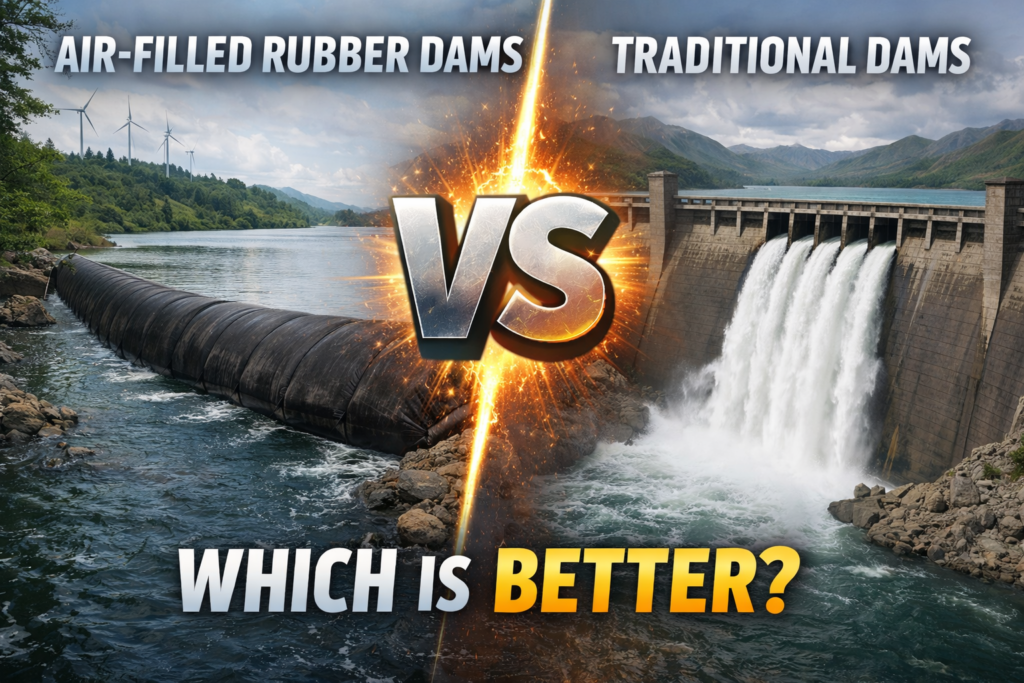
When we compare a rubber dam vs. a traditional dam, it becomes clear that older systems were built for a different time; when flexibility, speed, and sustainability were not priorities.
Today, we need smarter flood control infrastructure solutions that can adapt quickly, cost less, and work efficiently.
This is where air-filled rubber dams come in – a modern engineering solution designed for today’s water management challenges.
Understanding Traditional Dams & Their Limitations
A traditional dam (usually concrete) is a fixed hydraulic water control structure built across a river to store or block water.
It sounds simple. But the reality is complicated.
The problem starts with construction Traditional dams take:
- Years to plan
- Years to construct
- Huge capital investment
And once built, you cannot easily change how they work.
Key limitations
1. High construction cost: Concrete dams require massive materials, manpower, and land.
2. Long timelines: By the time the dam is ready, water needs may already have changed.
3. Environmental impact: They disrupt river flow, affect ecosystems, and displace communities.
4. Lack of flexibility: You cannot “adjust” a concrete dam based on seasonal needs.
This is why engineers today are exploring modern dam construction alternatives; solutions that are faster, smarter, and more adaptable.
What is an Air-Filled Rubber Dam?
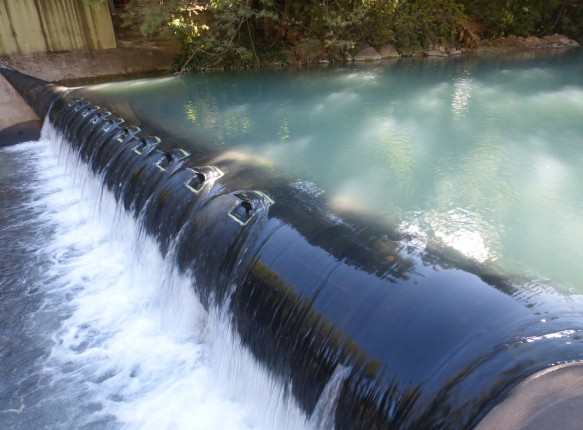
An air-filled rubber dam is a flexible structure made of reinforced rubber, installed across a river or canal. Instead of blocking water permanently, it works like this:
- Inflate → holds water
- Deflate → releases water
Simple.
This system uses inflatable rubber dam technology, which allows controlled water management without permanent obstruction.
You can think of it like a balloon placed across a river:
Fill it with air → water level rises
Release air → water flows normally
Because of this, it acts as a flexible water control system rather than a rigid structure.
These dams are commonly used for:
- Irrigation
- Urban water control
- Flood management
- River regulation
Air-Filled Rubber Dam vs Traditional Dam: Key Differences
Now let’s get practical. If you are choosing between both, this is what actually matters.
Core comparison: Air-Filled Rubber Dams vs Traditional Dams:
| Factor | Air-Filled Rubber Dam | Traditional Dam |
| Cost | Lower | Higher |
| Installation Time | Fast | Slow |
| Flexibility | High | Rigid |
| Maintenance | Low | High |
| Environmental Impact | Low | High |
What this really means
- An air-filled rubber dam vs traditional dam comparison is not just about structure — it’s about control.
- A concrete dam is permanent and rigid.
- An air-filled rubber dam adapts instantly based on operational needs (inflate/deflate control).
In modern projects, flexibility is not a bonus; it’s a requirement.
Cost Comparison: Air-Filled Rubber Dams vs Traditional Dams:
A. Traditional dams involve:
- Heavy construction
- Large workforce
- Long timelines
This makes the traditional dam vs air-filled rubber dam cost significantly higher.
Air-Filled Rubber dams, on the other hand:
- Require less material
- Need smaller teams
- Install faster
So the initial investment is much lower.
B. Maintenance cost
Concrete structures need:
- Regular inspection
- Repair of cracks
- Structural maintenance
Air-Filled Rubber dams are designed as low maintenance dam solutions.
They require minimal upkeep because:
- No complex moving parts
- No heavy structural stress
- Easy repair or replacement
C. Long-term savings
When you combine:
- Lower installation cost
- Lower maintenance cost
- Better efficiency
Air-Filled Rubber dams clearly provide better long-term value.
Advantages of Air-Filled Rubber Dams
This is where air-filled rubber dams clearly outperform traditional systems.
A. Faster Installation: Traditional dams can take years. Whereas, Air-filled rubber dams are installed in weeks or months. That’s a major advantage in urgent projects. This makes installation time one of its biggest strengths.
b. High Efficiency in Water Regulation: Air-filled rubber dams allow precise and real-time control over water flow. When the dam is inflated, it holds and stores water; when deflated, it releases water smoothly without obstruction. This simple mechanism makes the system highly responsive to changing conditions like rainfall, demand, or river levels. Because of this controlled operation, efficiency is significantly higher in practical scenarios, especially where water levels need constant adjustment. This also makes air-filled rubber dams highly effective for dynamic river water regulation methods, where flexibility is more important than rigid storage.
c. Low Maintenance & Operational Cost: Once installed, air-filled rubber dams work with minimal intervention. This makes them ideal low-maintenance dam solutions for long-term use.
d. Eco-Friendly & Sustainable: Air-filled rubber dams are designed to work with nature, not against it. Unlike traditional concrete dams that permanently block rivers, rubber dams can be deflated to allow natural water flow whenever needed. This means the river continues to behave more naturally, which reduces ecological disruption and protects aquatic life. Because they do not create permanent barriers and allow controlled flow, rubber dams support long-term sustainable water management systems, making them a more environmentally responsible choice.
e. Flexible & Adaptive Design: One of the biggest advantages of air-filled rubber dams is their ability to adapt to changing conditions. Unlike rigid structures, they can be adjusted based on seasonal water availability, demand requirements, or flood situations. During heavy rainfall, they can be deflated to release excess water, and during dry periods, they can be inflated to store water efficiently. This adaptability makes them highly effective flexible water control systems, especially in environments where water levels are unpredictable and require dynamic management.
Applications of Air-Filled Rubber Dams in Water Management
Air-filled rubber dams are not theoretical. They are already being used across multiple sectors where flexible and real-time water control is required.
- Flood Control: They act as smart, responsive barriers in flood control infrastructure, where air-filled systems can be deflated quickly to release excess water during heavy rainfall.
- Irrigation:Farmers benefit from controlled and adjustable water storage, improving agricultural output without permanent river blockage.
- Water Storage: Air-filled rubber dams help store water efficiently without the need for massive reservoirs, making them ideal for small to mid-scale projects.
- Urban Water Systems: Cities use them for:
- Water level control
- Drainage management
- Riverfront development
These are practical, real-world water management solutions powered specifically by air-filled rubber dam technology.
Why Air-Filled Rubber Dams Are the Future of Water Management
Let’s be blunt- water problems are increasing.
- Climate change is making rainfall unpredictable
- Urban flooding is rising
- Water scarcity is growing
Old systems cannot handle new problems.
We need:
- Faster solutions
- Flexible systems
- Scalable infrastructure
Air-filled rubber dams fit perfectly into this need due to their speed, flexibility, and real-time control capabilities.
Air-filled rubber dams support:
- Sustainable water management systems
- Adaptive infrastructure
- Smart flood control infrastructure solutions
This is why they are becoming the preferred choice in modern projects.
Conclusion
When you compare Air-filled rubber dam vs Traditional dam, the difference is clear:
- One is rigid and expensive
- The other is flexible, cost-effective, and efficient
Air-filled rubber dams are not just an alternative; they are a better solution for today’s needs. If you are planning to implement modern water control infrastructure, explore our rubber dam solutions for flexible and efficient water management to understand how these systems can be customized for your project requirements.
With benefits like:
- Faster installation
- Lower cost
- Better control
- Reduced environmental impact
they are redefining how we manage water. For engineers, planners, and decision-makers, the shift is already happening.
Signet offers Air-filled rubber dam and Water-filled solutions designed for real-world challenges, combining engineering simplicity with high performance because in modern infrastructure, the best solution is not the biggest one; it’s the smartest one.
FAQs
1. What is the difference between Air-Filled Rubber Dams vs Traditional Dams
A rubber dam is a flexible, inflatable structure that can be raised or lowered to control water flow, while a traditional dam is a permanent concrete structure designed to store or block water. Rubber dams offer more flexibility, faster installation, and lower costs compared to traditional dams.
2. Are air-filled rubber dams more cost-effective than traditional dams?
Yes, air-filled rubber dams are generally more cost-effective. They require less material, smaller construction teams, and shorter installation time, resulting in lower initial and maintenance costs compared to traditional concrete dams.
3. How do rubber dams help in flood control?
Rubber dams help in flood control by allowing real-time adjustment of water levels. During heavy rainfall, they can be deflated quickly to release excess water, reducing the risk of flooding and improving overall water management.
4. What are the environmental benefits of rubber dams?
Rubber dams have a lower environmental impact because they do not permanently block rivers. They can be deflated to allow natural water flow, helping preserve aquatic ecosystems and supporting sustainable water management.
5. Where are rubber dams commonly used?
Rubber dams are widely used in irrigation systems, urban water management, flood control projects, river regulation, and water storage applications due to their flexibility and efficiency.