
Key Insights
This blog explains why coastal erosion solutions India are becoming more important than ever and how geotextile tubes are solving this problem in a simple, cost-effective way. Coastal erosion is damaging beaches, infrastructure, and ecosystems across India. Traditional protection methods are expensive, rigid, and slow.
In this blog, you’ll understand:
- What is causing coastal erosion in India
- Why old shoreline protection methods are failing
- How geotextile tubes for coastal protection work
- Why they are more practical, flexible, and sustainable
- Where they can be used across India
In simple terms, this blog shows how modern engineering can protect coastlines without making things more complicated or expensive.
Introduction
India has a long coastline, but that coastline is slowly disappearing.
Every year, waves, storms, and human activity eat away parts of the shore. Beaches shrink, roads collapse, and nearby infrastructure becomes unsafe. This is not just an environmental issue, it is an economic and safety problem.
This is why the demand for better coastal erosion solutions India is increasing rapidly. Traditional beach erosion control methods are struggling to keep up because they are expensive, slow to build, and not flexible enough for changing coastal conditions.
Today, engineers are moving toward smarter solutions that are faster, adaptable, and cost-effective. One such solution is geotextile tubes — a modern method that helps protect coastlines by working with natural processes instead of blocking them completely.
Understanding Coastal Erosion in India
Coastal erosion in India is not happening randomly. It is caused by a mix of natural and human factors. Strong waves and tides constantly move sand away from the shore. Climate change is making sea levels rise and increasing the intensity of storms. At the same time, human activities like construction, ports, and sand mining disturb the natural balance of coastal areas.
Because of this, many regions in India are now high-risk zones. States like Tamil Nadu, Kerala, Odisha, and Gujarat are already facing serious shoreline loss. The problem is that most coastal erosion solutions India still rely on outdated beach erosion control methods that are not designed for these changing conditions.
As a result, instead of solving the problem, many projects only shift the erosion to another area.
Traditional Shoreline Protection Methods & Their Limitations
For years, engineers have used methods like seawalls, rock revetments, and concrete barriers as shoreline protection methods. These are among the best coastal protection methods India has relied on historically, but they come with serious limitations.
First, they are very expensive. Building large concrete structures or placing heavy rocks requires significant material, transport, and labor cost.
Second, they take a long time to construct. By the time the project is completed, coastal conditions may already have changed.
Third, they are rigid. Once installed, they cannot adapt to changing wave patterns or shoreline movement.
Most importantly, they often damage the environment. Instead of controlling erosion, they can increase wave energy in nearby areas, leading to further damage.
This is why modern coastal protection systems are shifting toward flexible and sustainable alternatives.
What Are Geotextile Tubes?
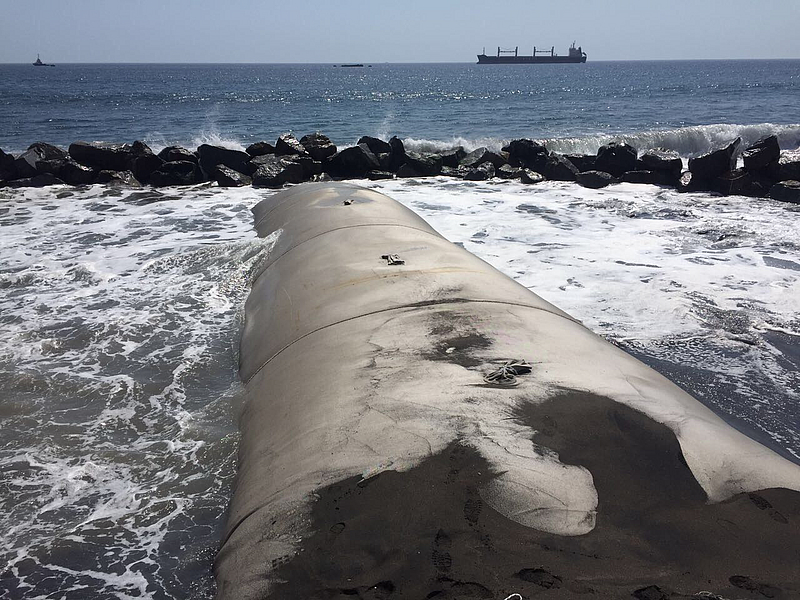
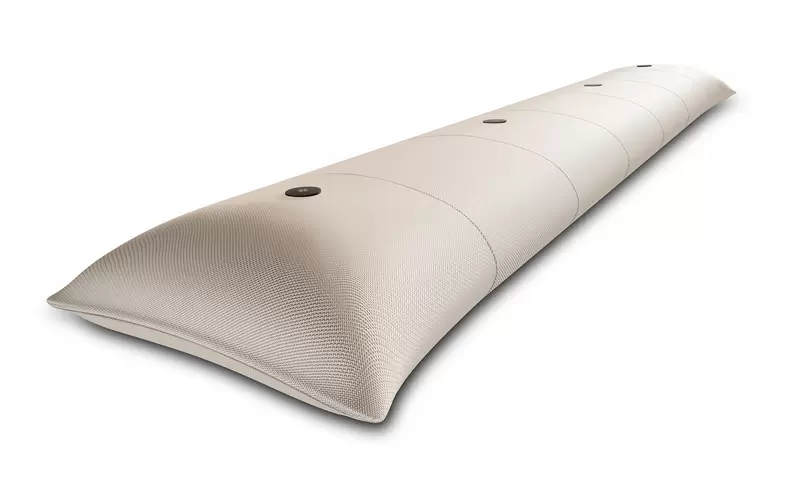
Geotextile tubes are large fabric tubes filled with sand and placed along the coastline to reduce wave energy and prevent erosion.
They act as a soft barrier that absorbs wave impact instead of reflecting it like concrete structures.
(For a detailed explanation, refer to our dedicated blog on geotextile tubes.)
Why Geotextile Tubes Are the Best Solution for Coastal Protection
This is where things get practical.
A. Cost-Effective Solution: One of the biggest benefits of geotextile tubes is cost. Traditional methods require heavy materials like concrete and rock, along with transportation and large-scale construction. In contrast, geotextile tubes use fabric and locally available sand. This reduces material cost, transport cost, and labor requirements, making them a much more affordable option for large-scale projects.
B. Faster Installation: Time is critical in coastal protection. Geotextile tubes can be installed much faster compared to traditional structures because they do not require heavy construction or curing time. The tubes are placed, filled with sand, and positioned along the shoreline. This significantly reduces project timelines, making them ideal for urgent erosion control projects.
C. Eco-Friendly & Sustainable: Unlike rigid barriers, geotextile tubes work with natural coastal processes. They absorb wave energy instead of reflecting it, which reduces erosion without disturbing marine ecosystems. Over time, sand can settle around them, helping restore the natural beach profile. This makes them a strong solution for sustainable water management systems and environmentally responsible coastal protection.
D. Flexible & Adaptive Structure: Coastlines are always changing, so protection systems must adapt. Geotextile tubes are flexible structures that can adjust to different coastal conditions, wave patterns, and shoreline changes. They can be used in Open beaches, River mouths & Coastal infrastructure zones.
E. Uses Locally Available Materials: Geotextile tubes are filled with sand, which is usually available at or near the site. This reduces the need for transporting heavy materials from far locations, making the project faster and more cost-efficient. It also simplifies logistics, which is a major challenge in coastal projects.
Geotextile Tubes vs Traditional Coastal Protection Methods
When comparing modern and traditional systems, the difference is clear.
| Factor | Geotextile Tubes | Traditional Methods |
| Cost | Low | High |
| Installation | Fast | Slow |
| Flexibility | High | Rigid |
| Environmental Impact | Low | High |
This comparison shows why geotextile tubes are becoming one of the best coastal protection methods India is moving toward. They are not just cheaper; they are smarter and more adaptable.
Applications of Geotextile Tubes in India
Geotextile tubes are already being used in multiple applications across India. For coastal areas, they provide strong protection against erosion by acting as barriers that reduce wave impact. They are also used in shoreline stabilization techniques, where they help maintain the natural shape of the coast. Beyond coastal use, they are effective in riverbank stabilization, where they prevent soil erosion along river edges.
In flood-prone areas, they act as temporary or permanent barriers to control water flow because of this versatility, geotextile tubes are becoming a reliable solution across different water management projects.
Why Geotextile Tubes Are Ideal for India’s Coastal Conditions
India’s coastline is long, diverse, and constantly changing. At the same time, projects need to be cost-effective and scalable. This is where traditional systems struggle. They are expensive, slow, and difficult to replicate across multiple locations.
Geotextile tubes, on the other hand, are simple, scalable, and adaptable.
They fit perfectly into the need for modern coastal erosion solutions India, especially where budgets are limited but protection is urgent. Their flexibility makes them suitable for different coastal conditions, from high-energy wave zones to calmer shoreline areas. This makes them one of the most practical coastal protection systems for India today.
Conclusion
Coastal erosion is not going to stop but the way we respond to it can change. Traditional methods are expensive, rigid, and often ineffective in the long run. Geotextile tubes offer a better approach- one that is cost-effective, flexible, and environmentally responsible.
They are not just an alternative. They are a smarter solution for modern coastal challenges.
For anyone looking for reliable coastal erosion solutions India, geotextile tubes are clearly one of the best options available today. With the growing need for sustainable and scalable infrastructure, the future of coastal protection lies in solutions that are simple, adaptive, and efficient.
Signet provides advanced geotextile tube solutions designed for real-world coastal conditions, combining engineering simplicity with strong performance. Because protecting coastlines should not be complicated. It should just work.
FAQs
1. What are the best coastal erosion solutions in India?
The best coastal erosion solutions in India include geotextile tubes, beach nourishment, mangrove restoration, and offshore breakwaters. Among these, geotextile tubes are gaining popularity due to their cost-effectiveness, flexibility, and faster installation.
2. How do geotextile tubes help in coastal erosion control?
Geotextile tubes act as soft barriers filled with sand that absorb wave energy instead of reflecting it. This reduces shoreline erosion and helps maintain the natural coastal structure.
3. Why are traditional coastal protection methods failing in India?
Traditional methods like seawalls and rock revetments are expensive, rigid, and slow to install. They often increase erosion in nearby areas and are not suitable for changing coastal conditions.
4. What are softer solutions to coastal erosion?
Softer solutions include geotextile tubes, beach nourishment, dune restoration, and vegetation planting. These methods work with natural processes and are more sustainable than hard structures.
5. What are the 4 main types of coastal erosion?
The four main types are hydraulic action, abrasion (corrasion), attrition, and solution (corrosion). These processes gradually wear away coastlines over time.
6. Which states in India are most affected by coastal erosion?
States like Tamil Nadu, Kerala, Odisha, and Gujarat are highly affected due to strong wave action, rising sea levels, and human activities like construction and sand mining.
7. What can be done to stop coastal erosion in India?
Coastal erosion can be controlled using geotextile tubes, shoreline stabilization techniques, proper coastal planning, and eco-friendly solutions like mangrove restoration.
9. Where can geotextile tubes be used in India?
They can be used on open beaches, riverbanks, coastal infrastructure zones, and flood-prone areas for erosion control and shoreline stabilization.
10. Why are geotextile tubes ideal for India’s coastal conditions?
They are cost-effective, use locally available sand, are easy to install, and adapt to changing coastal environments, making them suitable for India’s diverse coastline.