
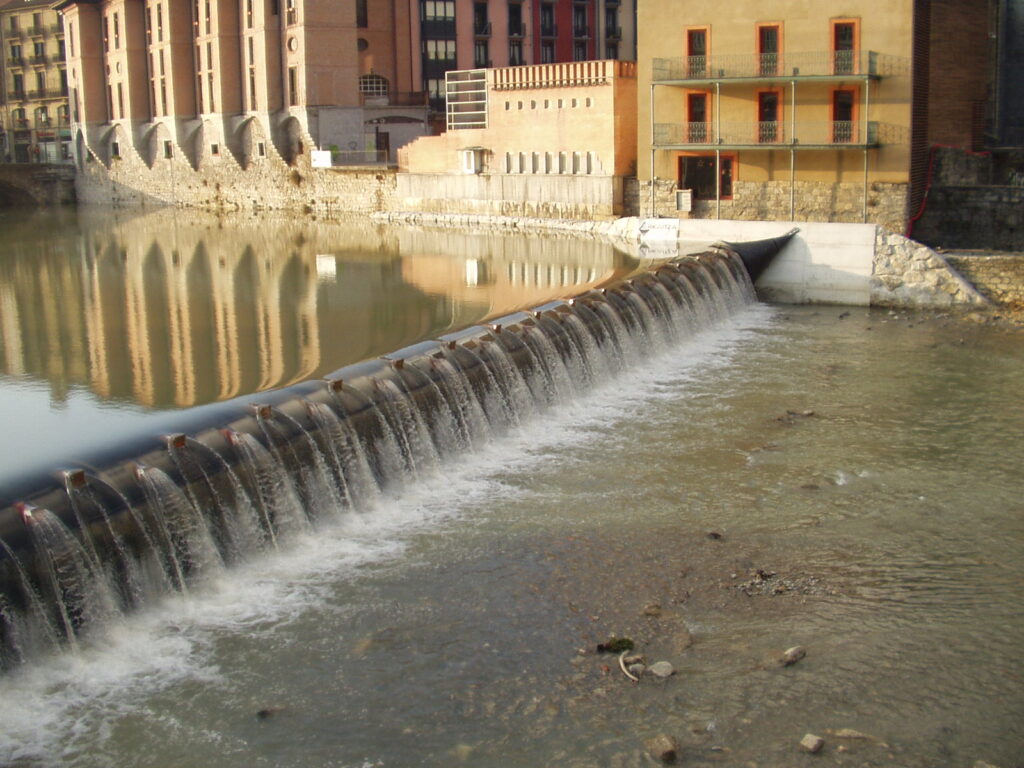
India’s relationship with its water resources presents a complex paradox. While our vast river basins generate an immense volume of annual surface water runoff, more than 1,100 billion cubic meters of this critical resource simply drains away unused every year. This massive unmanaged runoff triggers devastating seasonal inundations during peak monsoons, only to leave major agricultural regions completely parched during the arid summer months.
For generations, the standard response to this challenge relied heavily on rigid, monumental architecture: constructing massive concrete barriers and fixed steel-gated weirs. While these structures served their purpose in earlier eras of civil development, modern climate volatility has laid bare their inherent vulnerabilities. Heavy, static concrete infrastructure lacks the agility to adapt to sudden weather shifts, demands enormous upfront capital, accelerates severe river channel siltation, and inflicts irreversible damage on local aquatic ecosystems.
As progressive planners in 2026 seek more adaptable, low-impact alternatives, advanced hydraulic engineering solutions are stepping to the forefront. The strategic transition toward flexible rubber dam technology is radically reshaping the landscape of sustainable water infrastructure across India—providing a responsive, automated methodology to stabilize river dynamics and secure vulnerable communities.
What Exactly is an Inflatable Rubber Dam?
An inflatable rubber dam is an adjustable, cylindrical bladder fabricated from high-strength flexible composites and anchored firmly to a reinforced concrete pad spanning a riverbed or distribution canal. Rather than manipulating heavy, motorized iron gates, these advanced rubber dams control upstream water levels by dynamically inflating or deflating its internal chamber with air, water, or a specialized hybrid combination of both.
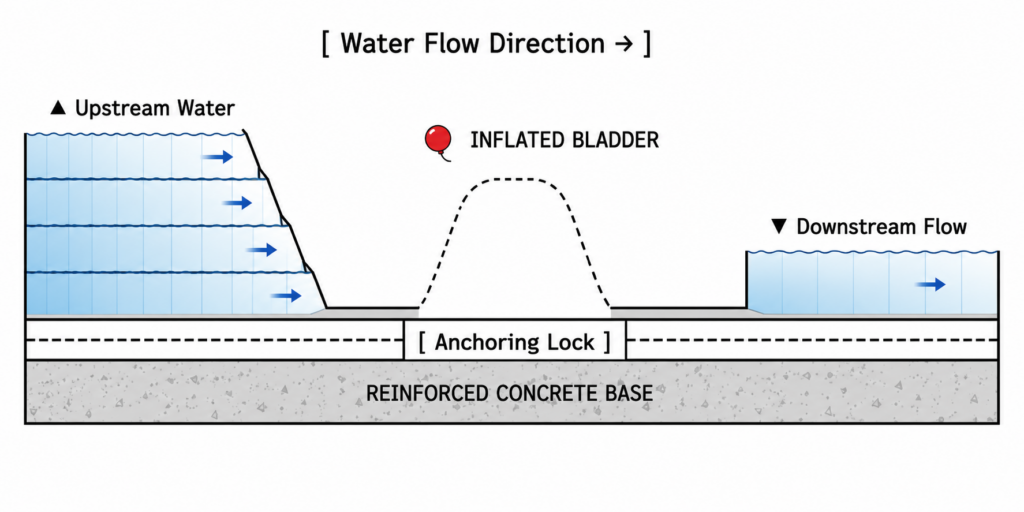
The underlying material science dictates the immense resilience of this infrastructure asset:
1. The Elastomeric Matrix: The outermost layer utilizes a specialized, UV-stabilized rubber compound engineered to resist long-term solar degradation, chemical exposure, and impacts from floating debris.
2. Internal Structural Reinforcement: Tensile integrity is achieved by integrating multiple layers of high-strength synthetic fabrics, such as nylon or polyester. This robust composite membrane ensures even distribution of immense hydrostatic pressure, completely preventing tearing through countless operational cycles. To understand how these materials meet international benchmarks, engineers frequently align design frameworks with global standards for flexible hydraulic barriers via the International Commission on Large Dams (ICOLD).
3. Geotechnical Underpinning: To eliminate subsurface leakage under the installation, engineers fortify the foundation utilizing tailored geotechnical environmental solutions. Deploying high-grade geomembranes delivers a dependable layer of impermeability, while rugged geotextiles serve as a protective barrier that shields the rubber bladder from abrasive riverbed sediments.
The Evolution of Automated River Control
In the early days of flexible barriers, infrastructure planners frequently voiced concerns regarding puncture risks and the challenges of manual oversight during sudden weather emergencies. However, continuous innovations in modern rubber dam construction have systematically resolved these operational liabilities through two key engineering breakthroughs:
1. Advanced Material Longevity
Next-generation, multi-layered vulcanized rubber configurations are manufactured to endure multiple decades of continuous submersion. They easily resist scouring from heavy bed loads and sustain structural elasticity across thousands of inflation and deflation sequences.
2. SCADA and IoT Automation
The true operational leap manifests in the contemporary automatic rubber dam. By embedding Internet of Things (IoT) sensors and SCADA systems, the infrastructure actively tracks upstream pressure shifts in real time. When a sudden flash flood occurs, the control logic triggers autonomous deflation valves—lowering the flexible barrier completely flat against the riverbed in under an hour without requiring on-site human intervention.
Dual Impact: Flood Prevention and Precision Irrigation
Implementing these dynamic rubber barriers throughout India’s diverse river basins yields immediate operational and environmental dividends.
1. Eco-Friendly Flood Control & Flow Regulation
Conventional concrete structures function as permanent obstructions. They trap moving silt, choke natural channels, and steadily elevate the upstream riverbed—which inadvertently compounds local flood hazards. Conversely, when an inflatable gate is fully deflated during peak monsoon flows, it leaves the active channel entirely clear. This facilitates genuine eco-friendly flood control, safeguarding uninterrupted sediment transport and allowing native aquatic species to migrate without restriction.
2. Intelligent Irrigation Water Control
For critical agricultural zones, these adjustable systems afford highly precise irrigation water control. By inflating the composite bladders precisely as seasonal rains begin to recede, operators catch the tail end of the runoff to establish localized conservation pools. This captured water can then be fed systematically into distribution canals during dry cultivation cycles.
Furthermore, sustaining these upstream reservoirs over extended periods fosters profound water conservation innovations. By retarding rapid surface runoff, the standing water naturally encourages deep groundwater recharge, effectively replenishing heavily depleted regional aquifers in water-stressed agricultural belts.
Real-World Impact: The Gayaji Dam Success Story
The immense practical value of this engineering approach is perfectly illustrated by India’s primary flagship project: The Gayaji Dam on the Falgu River in Bihar.
Case Study: The Gayaji Rubber Dam (Gaya, Bihar)
The Challenge: The Falgu River is historically designated as Antarsalila—a river that flows predominantly beneath its sandy bed. For centuries, the surface channel remained completely dry for most of the year, preventing millions of pilgrims visiting the historic Vishnupad Temple from accessing surface water for traditional rituals. Conventional concrete barriers were unfeasible because they would disrupt the highly porous sub-surface geology and block natural underground flows.
The Solution: The Government of Bihar constructed a massive, 411-meter-long, 3-meter-high inflatable rubber dam directly across the wide river channel.
The Outcome: The installation successfully retains up to 10 feet of surface water year-round near the temple ghats, while simultaneously boosting local groundwater tables. During heavy monsoon rushes, the automated system seamlessly deflates to prevent upstream flooding, proving that flexible structural design can perfectly reconcile cultural heritage preservation with modern flood resilience.
Structural Comparison: Rubber Dams vs. Traditional Barriers
| Operational Attribute | Traditional Concrete & Steel Barrages | Modern Inflatable Rubber Dams |
| Capital & Construction Cost | High; demands immense material volumes and heavy deep-earth structural reinforcement. | Significantly lower; relies on a streamlined concrete pad and modular components. |
| Project Execution Timeline | Long; typically takes several years to complete extensive site work. | Short; rubber bladders can be unrolled, anchored, and commissioned within months. |
| Ecosystem & Wildlife Impact | High; permanently fragments aquatic habitats and traps passing river silt. | Low; flattens completely to allow natural sediment transport and fish passage. |
| Maintenance & Longevity | Complex; mechanical iron gates rust over time and require continuous lubrication. | Minimal; non-corrosive anchoring components and highly durable rubber composites. |
Securing India’s Climate-Resilient Future
As municipalities and state planning boards aggressively scale up domestic civil infrastructure in India, moving toward flexible, low-carbon engineering is no longer optional. Traditional, rigid concrete infrastructure struggles to keep pace with volatile weather shifts. To track nationwide deployment frameworks and guidelines for these alternative structural assets, planners routinely monitor updates from the Central Water Commission (CWC) of India.
By implementing smart water management systems, we gain the operational agility needed to capture sudden, intense downpours while conserving vital water assets for the dry season. The success of these installations relies entirely on the quality of their underlying materials—specifically, the resilience of the vulcanized rubber membrane and the integrity of the geosynthetic sealing.
Investing in high-performance environmental engineering in India ensures that our country’s transition toward renewable water control technology remains secure, long-lasting, and ready to meet the climate challenges of tomorrow.. Utilizing Signet EnerTech’s dynamic environmental engineering solutions allows modern developers to minimize the massive carbon footprints tied to older, resource-heavy building practices.
Conclusion: Partnering for a Resilient Future
The transition toward flexible, inflatable systems represents a monumental paradigm shift in India’s water management blueprint. We are moving away from rigid, disruptive concrete methods. Instead, India is embracing agile, eco-friendly, and financially sound infrastructure. These installations provide real-time river flow regulation and safeguard critical agricultural sectors with precise irrigation water control. By introducing autonomous protection against unpredictable monsoons, they are proving to be the backbone of sustainable water infrastructure in India.
However, the operational lifespan and structural safety of an inflatable rubber dam are entirely dependent on what happens beneath the surface. The high-tensile composite fabric must be durable. Furthermore, the underlying anchoring foundation requires uncompromising material quality to ensure absolute integrity.
At Signet, we specialize in delivering high-performance geotechnical environmental solutions. These specialized materials are necessary to secure cutting-edge hydraulic projects. We provide superior geomembranes that guarantee absolute waterproofing. Additionally, we offer heavy-duty geotextiles designed to shield structural components from abrasive river environments. This foundational engineering support keeps India’s vital water assets secure. Connect with our engineering experts today to discover how we can elevate your next civil infrastructure development. We help ensure long-term longevity and resilience.